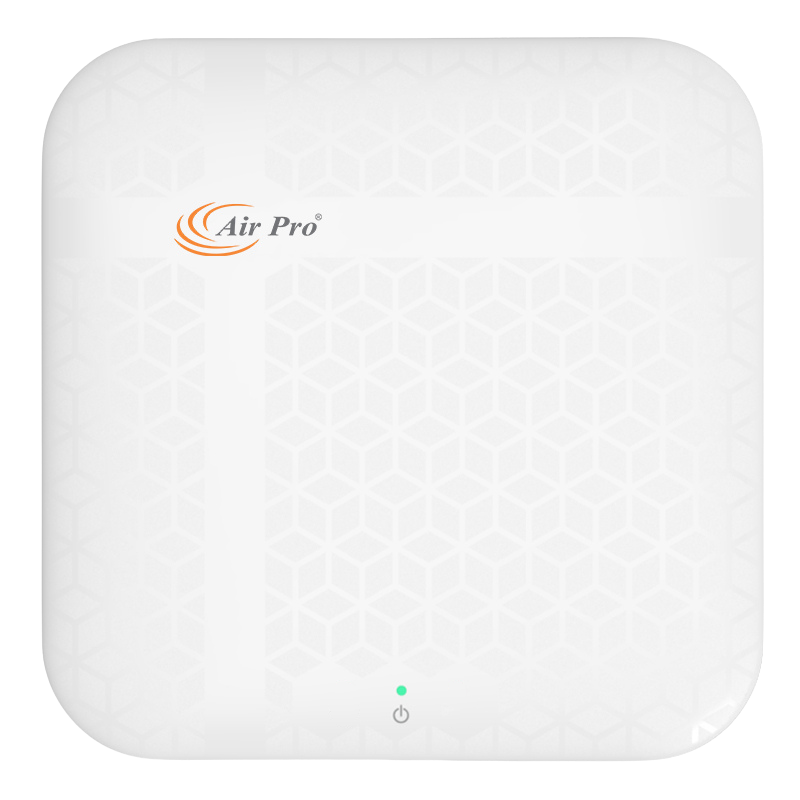
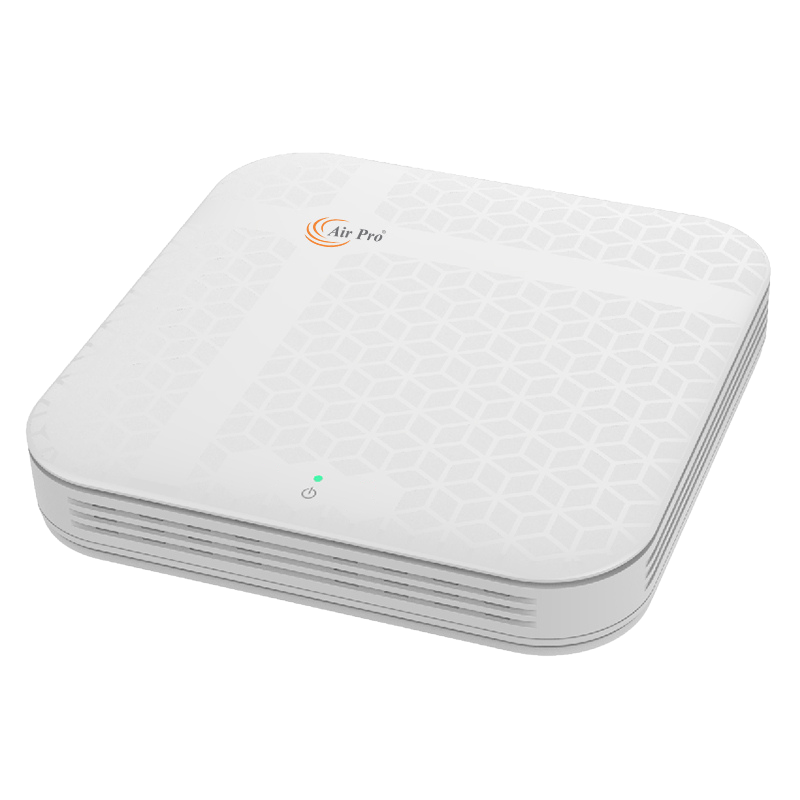
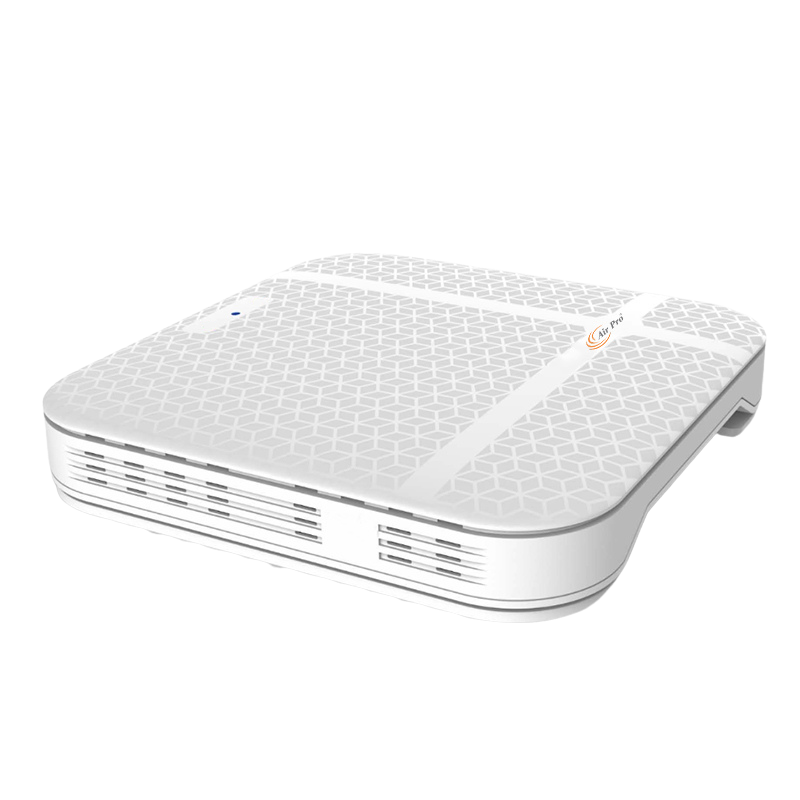
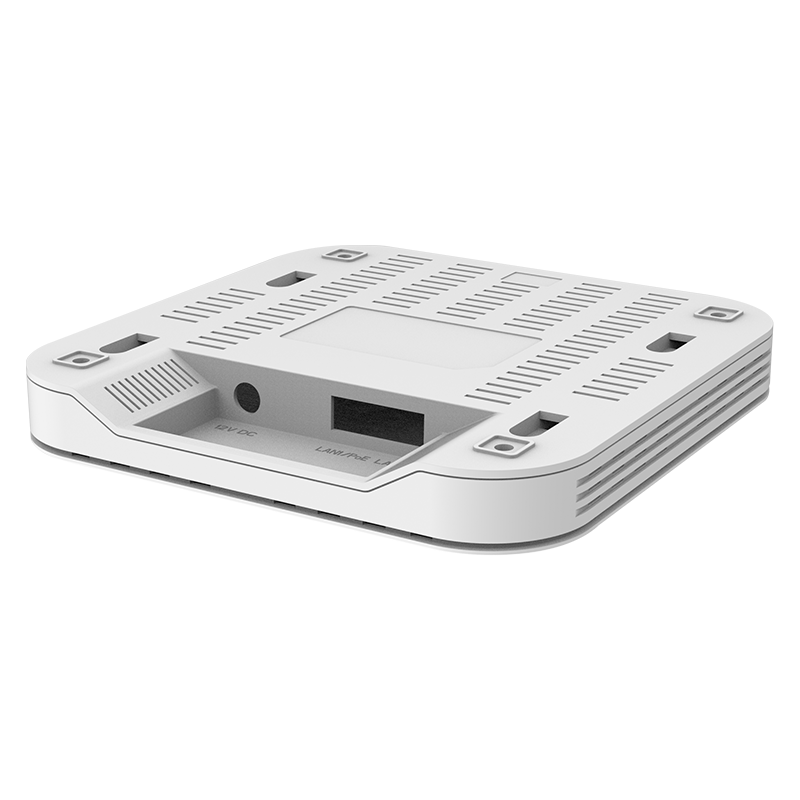
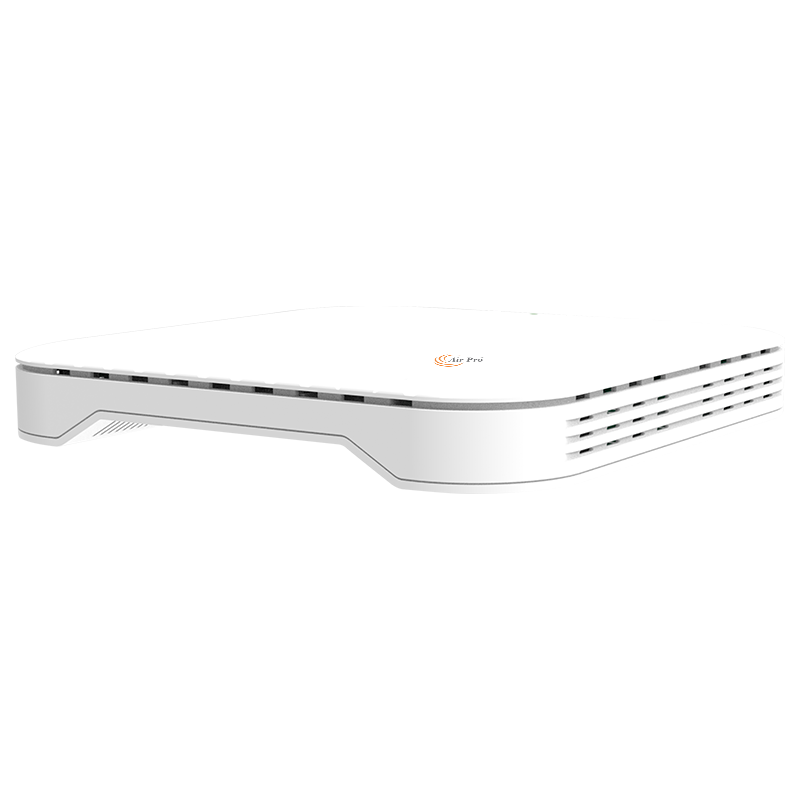
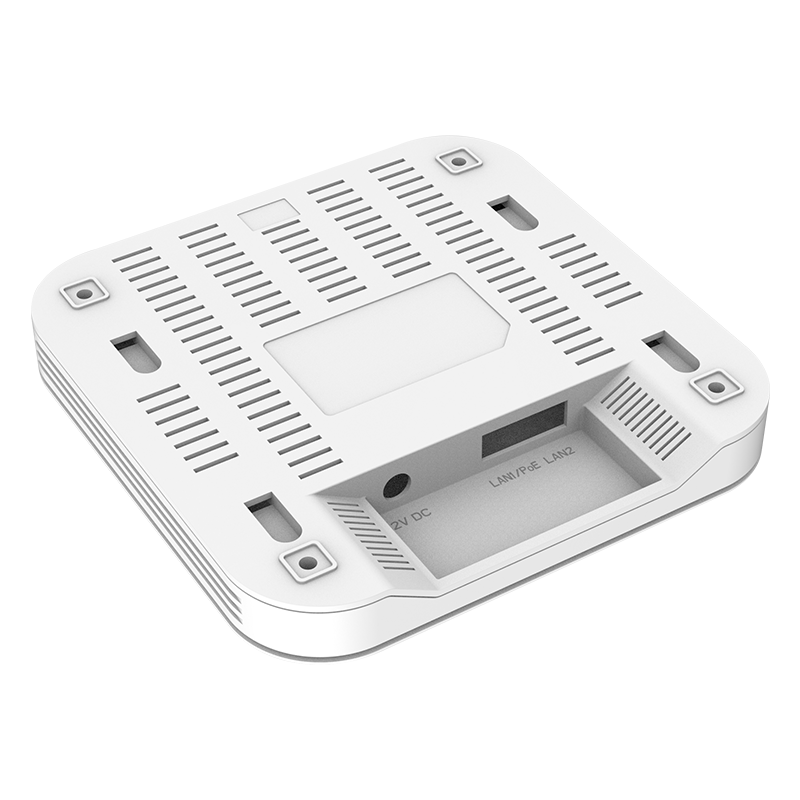
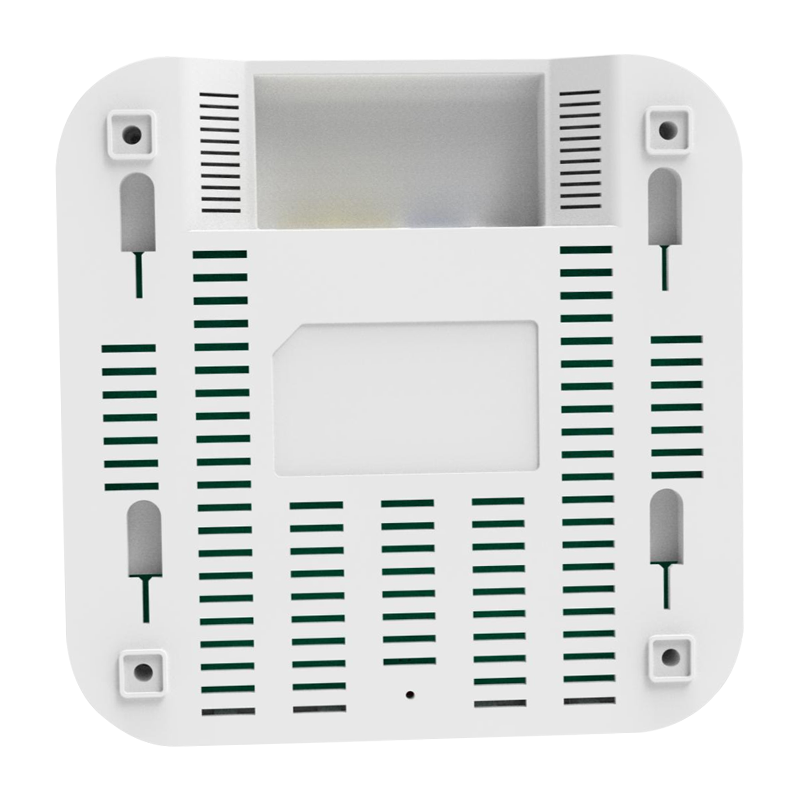
AIR-AP605C-X1(V2)
1800Mbps Indoor Wi-Fi6 (11ax) Dual Band Enterprise AP
- Wi-Fi 6 (IEEE 802.11ax) Dual-Band 2×2 MIMO
- Up to 1.775 Gbps aggregate wireless throughput
- Supports 128 concurrent wireless clients
- Intelligent RF optimization with Dynamic Channel Assignment (DCA)
- Airtime Fairness and High-Density Client Optimization
Product Overview
The AIR-AP605C-X1(V2) is an enterprise-grade dual-radio Wi-Fi 6 (IEEE 802.11ax) indoor access point engineered to deliver high-capacity, low-latency wireless connectivity for modern business environments. Designed for high-density deployments, it combines advanced RF technologies with Gigabit Ethernet connectivity to provide reliable performance for offices, educational institutions, hospitality, healthcare, retail, and other mission-critical wireless networks.
Featuring concurrent operation in the 2.4 GHz and 5 GHz frequency bands, the AIR-AP605C-X1(V2) delivers an aggregate wireless throughput of up to 1.775 Gbps. The 2.4 GHz radio supports data rates of up to 575 Mbps, while the 5 GHz radio provides up to 1,200 Mbps, ensuring optimal performance for both legacy and next-generation wireless clients.
Built on the Wi-Fi 6 architecture, the AIR-AP605C-X1(V2) incorporates technologies such as MU-MIMO, OFDMA, 1024-QAM, BSS Coloring, Target Wake Time (TWT), and advanced spatial multiplexing to improve network efficiency, increase client capacity, reduce airtime contention, and optimize power consumption for connected devices. These capabilities enable consistent user experience even in environments with a large number of simultaneously connected clients.
The AIR-AP605C-X1(V2) is designed to support centralized cloud or controller-based management, enabling simplified deployment, configuration, monitoring, security policy enforcement, and lifecycle management across distributed enterprise wireless networks.
Key Features
Enterprise-Class Wi-Fi 6 Performance
The AIR-AP605C-X1(V2) is a dual-radio indoor wireless access point designed for enterprise and commercial deployments. Supporting IEEE 802.11ax technology with simultaneous operation in the 2.4 GHz and 5 GHz frequency bands, it delivers an aggregate wireless throughput of up to 1.775 Gbps while providing reliable connectivity for high-density client environments.
High-Density Client Connectivity
Optimized for modern enterprise wireless networks, the AIR-AP605C-X1(V2) supports up to 128 concurrent wireless clients, delivering consistent performance for business applications, voice, video, collaboration, and IoT connectivity.
Multi-SSID and Granular Access Control
The access point supports up to 8 independent wireless networks (SSIDs), enabling logical separation of users, devices, and services. Each SSID can be individually configured with dedicated security policies, VLAN assignments, user authentication, traffic isolation, bandwidth management, and access control based on user or device attributes.
Flexible Deployment Options
Designed for diverse installation environments, the AIR-AP605C-X1(V2) supports multiple mounting methods including ceiling, wall, and T-grid ceiling installations, allowing rapid deployment across offices, educational campuses, hospitality venues, healthcare facilities, and commercial buildings.
Standards-Based Power over Ethernet
The AIR-AP605C-X1(V2) supports IEEE 802.3af and IEEE 802.3at Power over Ethernet (PoE), allowing both power and data transmission over a single Ethernet cable. This simplifies installation, minimizes cabling requirements, and ensures compatibility with standards-compliant enterprise switching infrastructure.
Flexible Operating Modes
To accommodate different deployment scenarios, the AIR-AP605C-X1(V2) supports multiple operating modes including Controller-Managed (Fit AP), Standalone (Fat AP), and Bridge Mode. Administrators can select the most appropriate operating mode based on network architecture, scalability requirements, and operational preferences.
Hardware Specifications
| Product Type | Indoor Enterprise Wi-Fi 6 (802.11ax) Access Point |
| Dimensions (W × D × H) | 180 × 180 × 28.5 mm |
| Uplink Interface | 1 × 10/100/1000Base-T Gigabit Ethernet (PoE) |
| Power Supply | IEEE 802.3at PoE or External DC Adapter (Input: 100–240 VAC, Output: 12 VDC / 1.5 A) |
| Maximum Power Consumption | < 13 W |
| LED Indicators | Power Status |
| Antenna | Integrated Dual-Band Omni-directional Antennas |
| Antenna Gain | 2.4 GHz: 5 dBi5 GHz: 5 dBi |
| Operating Frequency | 2.4 GHz: 2.400–2.4835 GHz (802.11b/g/n/ax) 5 GHz: 5.150–5.350 GHz, 5.470–5.725 GHz, 5.725–5.850 GHz (802.11a/n/ac Wave 2/ax) |
| Supported Wireless Standards | IEEE 802.11a/b/g/n/ac Wave 2/ax |
| Modulation Technology | 802.11b: DSSS (DBPSK, DQPSK, CCK) 802.11a/g: OFDM (BPSK, QPSK, 16-QAM, 64-QAM) 802.11n: MIMO-OFDM (BPSK, QPSK, 16-QAM, 64-QAM) 802.11ac Wave 2: MIMO-OFDM (up to 256-QAM) 802.11ax: OFDMA & MIMO (up to 1024-QAM) |
| Maximum Transmit Power | 2.4 GHz: Up to 23 dBm5 GHz: Up to 22 dBm* |
| Transmit Power Adjustment | 1 dBm Increment |
| Operating Temperature | –10°C to +50°C |
| Storage Temperature | –40°C to +70°C |
| Operating Humidity | 5%–95% RH (Non-condensing) |
| Storage Humidity | 5%–95% RH (Non-condensing) |
| Ingress Protection | IP41 |
| Deployment | Ceiling or Wall Mount (Indoor) |
Software Specifications
| Product Positioning | Indoor Dual-Band Enterprise Access Point |
| Operating Frequency | 2.4 GHz & 5 GHz |
| Maximum Wireless Throughput | Up to 1.775 Gbps |
| Virtual APs (BSSID) | Up to 8 (4 per radio) |
| Maximum Concurrent Clients | 128 |
| Spatial Streams | 2×2 MIMO (2.4 GHz), 2×2 MIMO (5 GHz) |
| Dynamic Channel Assignment (DCA) | Supported |
| Hidden SSID | Supported |
| RTS/CTS Protection | Supported |
| RF Environment Scanning | Supported |
| Hybrid Access Mode | Supported |
| Client Access Control | Maximum user limit per AP |
| Link Integrity Detection | Supported |
| Client Admission Control | Signal strength-based client access |
| Smart Roaming | Signal strength-based client steering |
| Airtime Fairness | Supported |
| High-Density Optimization | Supported |
IEEE 802.11ax (Wi-Fi 6) Enhancements
| Spatial Streams | 2×2 MIMO (2.4 GHz & 5 GHz) |
| Dual-Band Operation | Simultaneous 2.4 GHz + 5 GHz |
| 80 MHz Channel Bandwidth | Supported |
| PHY Data Rate | Up to 1,200 Mbps (5 GHz Radio) |
| A-MPDU Frame Aggregation | Supported |
| A-MSDU Frame Aggregation | Supported |
| Maximum Likelihood Demodulation (MLD) | Supported |
| Transmit Beamforming (TxBF) | Supported |
| Maximum Ratio Combining (MRC) | Supported |
| Space-Time Block Coding (STBC) | Supported |
| Low-Density Parity Check (LDPC) | Supported |
Security Features
| Wireless Encryption | 64/128-bit WEP, WPA2, WPA3, WPA2 Enterprise, WPA3 Enterprise, TKIP, AES-CCMP |
| IEEE 802.11i | Supported |
| Captive Portal Authentication | Supported |
| MAC Authentication | Supported |
| LDAP Authentication | Supported |
| PEAP Authentication | Supported |
| Secure AP Authentication | MAC Authentication, Password Authentication, Digital Certificate Authentication |
| Protected Management Frames (802.11w) | Supported |
| Frame Filtering | Supported |
| MAC Whitelist | Supported |
| Static & Dynamic Blacklist | Supported |
| Client Isolation | Supported |
| Scheduled SSID Enable/Disable | Supported |
| Free Resource Access Control | Supported |
| Access Control Lists (ACL) | MAC, IPv4 & IPv6 ACLs |
Forwarding & Roaming
| IP Address Assignment | Static IP or DHCP |
| IPv6 Support | Native IPv6 Forwarding |
| IPv6 Portal Authentication | Supported |
| Local Forwarding | Supported |
| Multicast Optimization | IGMP Snooping |
| Layer-2/Layer-3 Roaming | Supported |
| Intelligent Roaming Decision | Based on RSSI, Signal Strength, BER, SNR, AP Health & Neighbor Information |
Quality of Service (QoS)
| Wi-Fi Multimedia (WMM) | Supported |
| IEEE 802.1p Priority Mapping | Supported |
| Wireless-to-Wired QoS Mapping | Supported |
| SSID/VLAN QoS Policies | Supported |
| Layer 2–Layer 4 Traffic Classification | MAC, IPv4 & IPv6 |
| Load Balancing | Based on Client Count, Traffic Load & Frequency Band |
| Bandwidth Control | Per AP, SSID, Client & Application Flow |
| Power Saving Mode | Supported |
| Automatic AP Self-Recovery | Supported |
| Intelligent Client Identification | Supported |
| Multicast Optimization | Multicast-to-Unicast Conversion |
Management
| Network Management | Centralized Management via Wireless Access Controller (AC); Supports Fit & Fat Modes |
| Mesh Networking | Central AP Managed Wireless Mesh |
| Maintenance | Local & Remote Management |
| Logging | Local Logs, Syslog & Log Export |
| Alarm Management | Supported |
| Fault Detection | Supported |
| Performance Statistics | Supported |
| Operating Modes | Fit, Fat (Standalone) & Bridge Mode |
| Mode Switching | Remote switching between Fit/Fat/Bridge modes through AC, Web GUI or Telnet |
Application Environment
Hotels and resorts · Healthcare facilities · Auditoriums